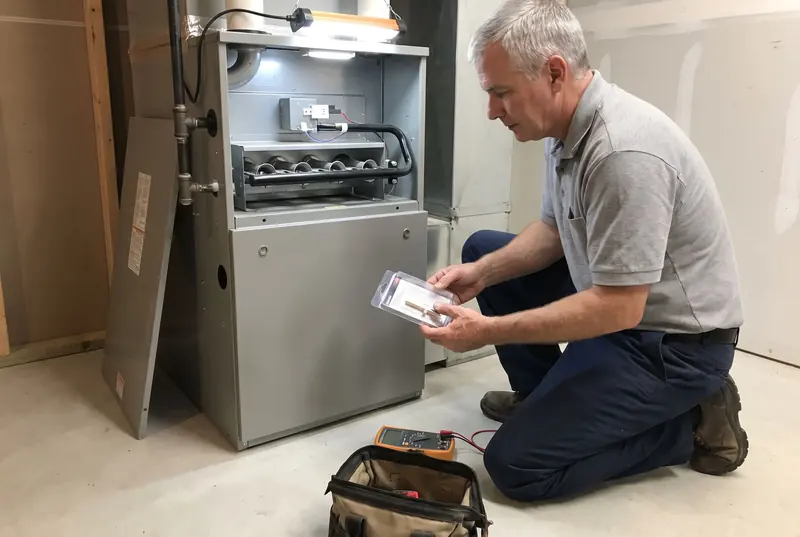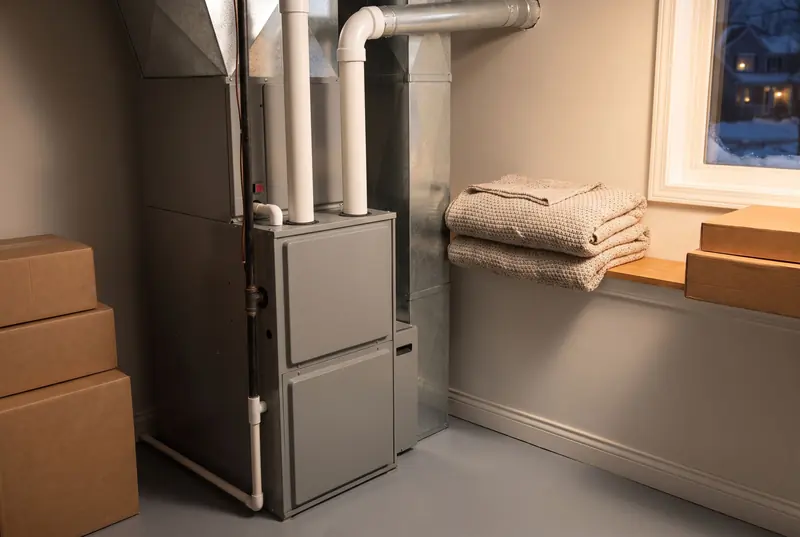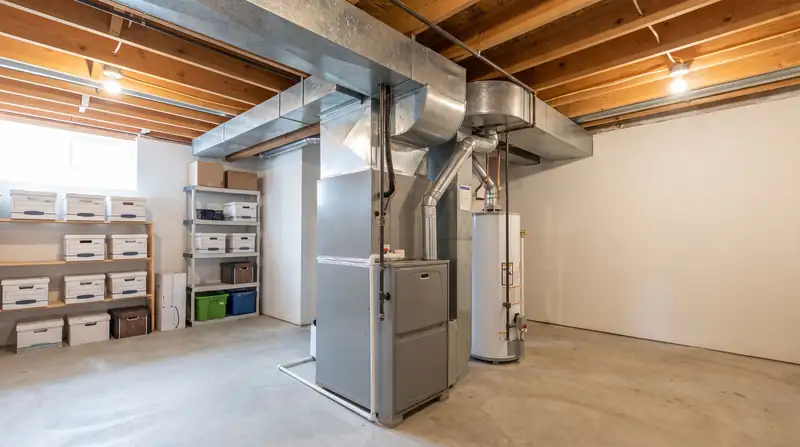

Every time your thermostat calls for heat, the furnace works through a fixed checklist. The inducer motor starts and proves draft by closing a pressure switch, the hot surface igniter heats up, the gas valve opens, the burners light, and the flame sensor confirms there is fire. Only after all of that does the blower begin sending warm air into the house. Finding the step that fails is most of the job. Around Westminster, CO, the usual failure points are an oxide-coated flame sensor, an igniter cracked by years of heating and cooling, a pressure switch that stays open because of a weak inducer or a clogged condensate trap on a high-efficiency unit, and control boards with burned relays. Each one halts the startup, and from the hallway they all look alike.
For air conditioning breakdowns, see AC Repair.
Warning Signs for Furnace Repair
Catching these issues early helps you avoid costly problems. Here are the most common indicators that it's time to call a professional:
- Grinding or high-pitched squeals from the blower
- The igniter glows and clicks, yet no flame ever appears
- Short cycling every few minutes without reaching the setpoint
- Soot, rust, or moisture near the furnace cabinet or vent pipe
- A bang or boom when the burners ignite late
- Burners light, run a few seconds, then shut down repeatedly
- Yellow, wavering burner flames where they should be sharp blue
- A fan that keeps running while the registers blow cool air
Act Before It Gets Worse
A failing capacitor, clogged condensate drain, or dirty flame sensor rarely fixes itself and usually gets more expensive to address the longer it runs. Don't wait, call (970) 602-4926 and we'll take a look right away.